From Dan Denning in Albert Park:
This week's news that Toyota would quit making cars in Australia by
2017 sparked a big debate in the office. The subject? Can you have a
middle class without a manufacturing sector?
On the surface, Australia's economy is already dominated by
services, with 75% of jobs being in service related industries. The era
of lifelong employment in skilled manufacturing has been over for many
years.
But will that lead to lower standards of living for
Australians? Or will the country be better off moving into lower-volume
but higher-knowledge manufacturing jobs?
How you answer this question may come down to whether you
believe countries have, or should have, such a thing as 'national
interest' these days. From a consumer perspective, it certainly doesn't
matter if cars are made here. People can get what they want from just
about anywhere.
But the current global system - a diversified global supply
chain, 'just in time' logistics, cheap energy and large shipping
containers - is still fairly new, and perhaps not all that robust when
disagreements between countries escalate.
Put another way, do you want to be dependent for key technologies
or items on open and free markets? After all, very few governments
really believe in or practice free trade. Everyone protects their own,
whether it's for employment reasons or because they view key
technologies as something that should not be trusted to foreigners.
Once Toyota goes, Australia will be the only G-20 country
without a domestic auto making sector. But so what? In the 21st century,
do you need an industrial base to have a healthy economy? Maybe not.
However, history shows that the manufacturing sector played a big
role in getting a lot of people into the middle class. It was skilled
labour that employed millions of people in Britain and the United
States.
Per capita incomes grew. GDP grew. Wages grew in real terms. The
tax base grew too. That was the golden age and the peak for the US in
the 1950s and 1960s, when General Motors ruled the world.
The shift to a 'service based' economy is widely touted as both
inevitable and beneficial. But is it? If you don't have the accumulated
knowledge and capital to manufacture things - and how can you make
them competitively, in mass quantities, with globalised labour? - then
there's no doubt it changes the nature of your domestic job market.
In the US, the withering of manufacturing has meant more part
time work, at lower real wages, for more people. And arguably, it's also
meant less satisfying work for people, less meaningful work they could
be proud of and raise a family on.
After all, no one ever grew up wanting to stock women's underwear
at Walmart. You've also seen a structural decline in the labour force
participation rate, with fewer people looking for work and more people
dropping out of the workplace altogether and going on the dole.
With fake free trade, prices are lower for manufactured goods,
but wages have to go down too. What do you think that means for quality
of life? You have access to credit to buy cheaper goods and services.
But your real wages decline and so too does the satisfaction you take
from the work you do. Does that sound like a good deal? A fair trade?
Smaller city states (like Singapore) and nation states (like
Switzerland) are in a much better position to de-industrialise or
specialise in what they make (desalination technology in Singapore,
watches in Switzerland, for example). But it doesn't always work out
for the best.
Look at how finance and the City dominates the economy of the
UK. The middle class gets wiped out. Property prices in the big cities
soar. You have very, very rich people...and then pretty much everyone
else.
The same thing is going on in America, although it's been
somewhat tempered by the shale gas boom, where cheap energy has lured
some kinds of manufacturing back to American shores. But as the economy
shifts to services for the masses and finance for the elites, how many
people can
become bond traders and real estate agents in a country of 300 million people?
And what kind of economy is it when everyone makes money
selling houses to each other that they purchase with increasingly large
amounts of borrowed money?
This is why the micro-manufacturing or 'makers' revolution in 3D
printing that Sam and Kris have researched is such an important idea.
It's a massive change in scale for the economy, from large and
centralised to individual and decentralised.
Yet it's still based on the idea that you have to produce
something that someone else values to generate an income (whether it
matters to you is only half the battle...if you can't exchange it,
there's no transaction).
In the 20th century, mass-market manufacturing went hand-in-hand with the creation of a healthy middle class.
In the Western world, the middle class is under pressure from
lower labour costs in the emerging markets and financial repression from
Wall Street and Washington elites. The technology revolution can't
come soon enough because the war is already here...and it's on you.
Sunday, February 16, 2014

Saturday, February 15, 2014
FBI Warns About Online Dating Scams

It’s not everyday that you find a Federal Bureau of Investigation press release with the tantalizing and provocative title: “Looking for Love? Beware of Online Dating Scams” - and when you do, well, hey, ya gotta read that missive, right?
As “Street Sweeper” has regularly reported, there are a lot of crooks, scamsters, and creeps online. You may be looking for love. You may be looking for your next spouse or the love of your life. Trust me, there are a lot of folks lurking in the shadows of the Internet simply looking to separate you from your life’s savings. The FBI put it quite bluntly:
What’s the takeaway from that FBI scenario? For starters, a lot of folks may have not had the best Valentine’s Day this year — your online Valentine may be more Al Capone than Cupid. According to the FBI, you may have been just another pigeon targeted by someone who has likely made a career of searching for victims such as you.These criminals—who also troll social media sites and chat rooms in search of romantic victims—usually claim to be Americans traveling or working abroad. In reality, they often live overseas. Their most common targets are women over 40, who are divorced, widowed, and/or disabled, but every age group and demographic is at risk.Here’s how the scam usually works. You’re contacted online by someone who appears interested in you. He or she may have a profile you can read or a picture that is e-mailed to you. For weeks, even months, you may chat back and forth with one another, forming a connection. You may even be sent flowers or other gifts. But ultimately, it’s going to happen—your new-found “friend” is going to ask you for money.So you send money…but rest assured the requests won’t stop there. There will be more hardships that only you can help alleviate with your financial gifts. He may also send you checks to cash since he’s out of the country and can’t cash them himself, or he may ask you to forward him a package. . .[I]n another recently reported dating extortion scam, victims usually met someone on an online dating site and then were asked to move the conversation to a particular social networking site, where the talk often turned intimate. Victims were later sent a link to a website where those conversations were posted, along with photos, their phone numbers, and claims that they were “cheaters.” In order to have that information removed, victims were told they could make a $99 payment—but there is no indication that the other side of the bargain was upheld.
How did the fraudster find you? Have you ever looked at all the personal, financial, and intimate stuff that you have posted about yourself on Facebook , Linked-In, Twitter, and who knows how many other dating or social media sites?
As to whatever your online suitor told you – fuggedaboutit. Those photos? Probably copied from someplace online. That life story? Probably bogus. All the promises and heart-felt assurances? Garbage. And what was the point of all of this? Not love. More likely a money laundering scheme. If your online friend asked sent you checks to cash, asked you to wire money overseas, or told you to send merchandise, there’s a good chance that you were enlisted in some international crime wave. Of course, as the FBI warns, you may also have been the victim of old-fashioned extortion dressed in modern-day digital trappings.
“Street Sweeper” recently reported about a criminal defendant who had hacked into online accounts and changed the user’s password, blocking the victim’s access. Thereafter, the hacker searched e-mails or other files for naked or semi-naked pictures of the victims, as well as other information, such as passwords and the names of their friends. The title of the article sort of tells you how frightening things got from there: “Hacker Charged With Using 3,000 Nude Photos To Victimize 350 Women.”
The FBI offers these helpful warning signs for safer online dating:
- Your online “date” may only be interested in your money if he or she:
- Presses you to leave the dating website you met through and to communicate using personal e-mail or instant messaging;
- Professes instant feelings of love;
- Sends you a photograph of himself or herself that looks like something from a glamour magazine;
- Claims to be from the U.S. and is traveling or working overseas;
- Makes plans to visit you but is then unable to do so because of a tragic event; or
- Asks for money for a variety of reasons (travel, medical emergencies, hotel bills, hospitals bills for child or other relative, visas or other official documents, losses from a financial setback or crime victimization).
- One way to steer clear of these criminals all together is to stick to online dating websites with nationally known reputations.
Wednesday, February 12, 2014
Can Facebook Ruin Your Marriage?
By SYDNEY LUPKIN
It turns out the kiss of death for marriages might be more like a poke.
A third of all divorce filings in 2011 contained the word "Facebook,"
according to Divorce Online. And more than 80 percent of U.S. divorce
attorneys say social networking in divorce proceedings is on the rise,
according to the American Academy of Matrimonial Lawyers.
Divorce lawyer Marian Rosen, who practices in Houston, said she's
increasingly seen social media cited in divorce proceedings and child
custody battles.
"We've had instances where they pull up Facebook in
the course of a deposition," Rosen told ABC News, adding that in
addition to proving infidelity, she's seen cases in which children's
profiles are cited as evidence to suggest bad parenting. "Once it's out
there for the world, it's very difficult … to erase from the past. There
are going to be trails that can be followed."
Three years ago, 20 percent of divorce filings contained the word
"Facebook." By 2011, it had risen to 33 percent, according to AAML.
Despite the increase, the top Facebook mentions were the same:
inappropriate messages to "friends" of the opposite sex, and cruel posts
or comments between separated spouses. Sometimes, Facebook friends
would tattle to one partner in a relationship about bad behavior by the
other.
None of this surprises Ilana Gershon, an Indiana University professor
and author of "The Breakup 2.0: Disconnecting Over New Media." For her
book, Gershon interviewed 72 people from their late teens to their late
50s to discuss the role social media played in their breakups.
"It turns out a lot of my interviews revolved around Facebook," she told
ABC News. "I feel quite thrilled when I get a Skype breakup or a text
message story instead. Finally not Facebook," she joked.
Although most of Gershon's research involved college students, she
interviewed older and now-divorced adults who were often stuck in cycles
of making up and breaking up with the same partner. To end the cycle,
some would break up with a Facebook wall post.
"One of the things I found was that people would sometimes turn to these
media as a way to finally end the relationship," Gershon said. "They
would use a medium that was so unacceptable that it would make the other
partner furious…'How could I have been with someone who is willing to
text this?'"
Gershon found that many college students deactivated their Facebook
accounts to save their relationships. Since Facebook posts are mostly
tiny nuggets of information provided without context, partners said they
became suspicious and started to stalk each others' profiles. It became
something to quit.
"They describe Facebook as something that would turn them into jealous,
distrustful people," Gershon said. "It was a really interesting question
for me because one stopped texting or emailing to save a relationship.
Why do people feel Facebook transformed who they are?"
We guess it's complicated.
WHAT TO KNOW
- It turns out the kiss of death for marriages might be more like a poke.
- A third of all divorce filings in 2011 contained the word "Facebook," and more than 80 percent of U.S. divorce attorneys say social networking in divorce proceedings is on the rise, according to Divorce Online and the American Academy of Matrimonial Lawyers, respectively.
Saturday, February 8, 2014
Ways to Tweak Your Diet As You Age
How to Tweak Your Diet As You Age
As you get older, it's important to make small changes to your diet to protect your long-term health. Here are seven nutrients to zero in on after turning 50.| Vitamin D |
Why you need it
Scientific journals have been bursting at the seams in recent years with
new research about the importance of vitamin D, and according the data,
the vast majority of women aren't getting enough. One recent study
found that adults with the lowest blood vitamin D levels were about
twice as likely to die from any cause compared to those with the highest
levels. Other studies have linked adequate intakes to lower rates of
obesity, type 2 diabetes, heart disease, high blood pressure,
osteoporosis, depression, certain cancers, and brain disorders such as
Alzheimer's disease.
This key nutrient is also tied to enhanced immunity, muscle functioning,
and injury prevention (pretty impressive, huh?). Vitamin D's nickname
is the "sunshine vitamin" because exposure to the sun's ultraviolet rays
triggers its production in the body, but you can't rely on the sun as
your sole source. Your location, cloud cover, smog, time of day and
year, and sunscreen use all affect your UV exposure and vitamin D
production.
How to get it
Some of the best natural food sources include wild salmon, whole eggs
(the D is in the yolk), and mushrooms, and it's in fortified foods like
dairy, but it can be difficult to eat enough of these foods to meet your
needs, so a supplement may be your best bet.
How much is safe
To identify the right amount to take, get your blood level tested. Based
on the results, your doctor can recommend the proper daily doseCalcium
Why you need it
Bone density declines more rapidly after 50, and one in three women over
this age will experience a bone fracture. Research shows that in the
first years after menopause, women may lose 3 to 5% of their bone mass
annually, and increases in calcium intakes generally don't offset the
losses. Calcium is also required for muscle contractions, so this
mineral allows you to get the most from every workout. It's also needed
for nerve function, and helps maintain your body's acid/base balance, so
there are plenty of reasons to strive to hit the suggested mark.
How to get it
While dairy may be your first thought, there are also several
plant-based sources, including dark leafy greens, beans and lentils,
nuts, and dried figs.
How much is safe
If you choose to use a supplement, just be sure not to go overboard. The
recommended daily calcium intake for women over 50 is 1,200 mg per day,
but the maximum advised limit, from both food and supplements combined,
from age 51 on is 2,000 mg per day. I've seen plenty of women exceed
that amount (sometimes unknowingly, sometimes because they mistakenly
believe more is better), and getting too much can be risky, with
potential side effects including kidney problems, kidney stones, and
calcium deposits in soft tissues. High calcium intakes can also lead to
constipation, and interfere with the absorption of iron and zinc, and
recently, excess calcium has been linked to a higher risk of heart
disease. Talk to your doctor or dietitian to be sure you're striking the
right balance.
Probiotics
Why you need them
Probiotics have been shown to boost immunity, improve digestive and skin
health, lower "bad" LDL cholesterol, fight gum disease, and enhance
weight control, so there's plenty to benefit from for women over 50.
How to get them
While foods like yogurt, kefir, kimchi, and sauerkraut contain
probiotics, it may be difficult to consume enough of these "friendly
bacteria" on a daily basis through food alone.
How much is safe
If you opt for a supplement, ask your doc or dietitian for a recommended
brand and amount. There's currently no standard dose for probiotics,
like those that have been established for vitamins and minerals; and
while probiotics are generally considered to be safe, your personal
medical history should be taken into account before you pop a pill.Omega-3 fatty acids
Why you need them
The omega-3s DHA (docosahexaenoic acid) and EPA (eicosapentaenoic acid)
are essential fatty acids that have been tied to vision and brain
protection, healthy hair and skin, improved circulation, reduced muscle
soreness, a lower risk of heart disease and depression, and a reduction
in inflammation, which is a known trigger of aging and disease. This
remarkable list of benefits makes getting sufficient amounts of these
good fats particularly important in your 50s.
How to get them
Fatty fish like salmon and sardines are rich sources, but a dislike of
seafood or concerns about mercury may interfere with getting enough. And
while plant-based foods like flaxseeds and walnuts contain a type of
omega-3 called alpha-linolenic acid or ALA, your body only converts a
small percentage of this form into EPA and DHA—the two types that the
vast majority of the research has focused on.
How much is safe
If you choose to take a supplement that provides DHA and EPA (vegan
options are available) it's important to note that there's currently no
standard daily dose for healthy adults. Many experts recommend 1,000 mg
of DHA/EPA combined, the amount advised for those with heart disease,
and like some of the other nutrients I've mentioned, it's important not
to go overboard. Emerging research shows that too much omega-3 may
weaken immunity, and excess intakes have been linked to bleeding,
especially when combined with medications or supplements that like
omega-3s, also have a blood thinning effect. Once again, to pinpoint the
amount that's right for you, rely on advice from your personal health
care providers.
Magnesium
Why you need it
Getting enough of this key "maintenance mineral" which is involved in
more than 300 bodily reactions can keep your energy soaring and allow
you to look and feel like you've turned back the clock. Magnesium helps
maintain normal muscle and nerve function, keeps heart rhythm steady,
supports a healthy immune system, preserves strong bones, and slashes
stroke and heart disease risk. It also helps regulate blood sugar levels
and promotes normal blood pressure, but many women fall short of the
recommended intake.
How to get it
Good food sources include spinach, almonds, cashews, black beans, quinoa, and pumpkin, sesame, and sunflower seeds.
How much is safe
If you opt for a supplement, look for one with no more than 100% of the
Daily Value (400 mg), unless your MD or RD has advised differently. Too
much magnesium can trigger nausea, diarrhea, appetite loss, muscle
weakness, breathing problems, irregular heartbeat, and dangerously low
blood pressure.
Fiber
Why you need it
Fiber-rich meals result in a steadier rise in blood sugar and a lower
insulin response, as well as a slower rate of digestion and absorption,
which keeps you fuller longer and delays the return of hunger. It also
keeps you "regular" by helping your digestive system stay in tip top
shape, and getting enough fiber is also a smart weight control strategy.
Research has shown that for every gram of fiber we eat, we eliminate
about seven calories. That means if you eat 35 grams a day, you'll
essentially "cancel out" 245 calories—a savings that could effectively
stave off age-related weight gain.
How to get it
To bolster your intake, rely on foods that are naturally fiber-rich,
like fruits and vegetables (especially those with an edible skin and/or
seeds or tough stalk) beans and lentils, and small portions of nuts and
whole grains, including oats, whole grain rice, quinoa, and barley.
Water
Why you need it
Water, your body's most important nutrient, is required for every bodily
process, and you lose water from your body each minute of the day.
Replacing those losses adequately can help you reap the benefits of
water, including optimized mood and metabolism, as well as better
digestive health (especially if you're stepping up your fiber game), and
glowing skin. Good old H2O is also linked to weight control. A recent
study found that when middle-aged and older adults drank two cups of
water prior to eating a meal, they ate between 75 and 90 fewer calories.
Another 12-week study found that adults who gulped extra water lost
about 30 percent more weight following the same diet compared to those
who drank less. And a small German study found that drinking two liters
of water a day could result in burning up to 95 extra calories, an
effect that could help fend off age-related weight gain.
How to get (more of) it
According to the Institute of Medicine (IOM), women ages 19 and over
need 2.7 liters of total fluid per day (more than 11 cups). About 20
percent of your fluid needs are met by food, but that still leaves
nearly nine cups based on the IOM's guidelines. While other beverages
may count as fluid, water is the best way to meet your daily needs, so
strive for at least 16 ounces four times a day.
Cynthia Sass is a registered dietitian with master's degrees in both
nutrition science and public health. Frequently seen on national TV,
she's Health's contributing nutrition editor, and privately counsels
clients in New York, Los Angeles, and long distance. Cynthia is
currently the sports nutrition consultant to the New York Rangers NHL
team and the Tampa Bay Rays MLB team, and is board certified as a
specialist in sports dietetics. Her latest New York Times best seller is
S.A.S.S! Yourself Slim: Conquer Cravings, Drop Pounds and Lose Inches.
Thursday, January 30, 2014
Don’t date a girl who travels
I read this blog and I thought it was funny but so true. I am also afraid that some of these travel girls ended up in one of the "left on the shelf Syndrome" women in their 30s and above who are hunting for any men to settle down to have babies.
Don’t date a girl who travels
 Adi in Better Humans
She’s
the one with the messy unkempt hair colored by the sun. Her skin is now
far from fair like it once was. Not even sun kissed. It’s burnt with
multiple tan lines, wounds and bites here and there. But for every flaw
on her skin, she has an interesting story to tell.
Don’t
date a girl who travels. She is hard to please. The usual dinner-movie
date at the mall will suck the life out of her. Her soul craves for new
experiences and adventures. She will be unimpressed with your new car
and your expensive watch. She would rather climb a rock or jump out of
an airplane than hear you brag about it.
Don’t
date a girl who travels because she will bug you to book a flight every
time there’s an airline seat sale. She wont party at Republiq. And she
will never pay over $100 for Avicii because she knows that one weekend
of clubbing is equivalent to one week somewhere far more exciting.
Chances
are, she can’t hold a steady job. Or she’s probably daydreaming about
quitting. She doesn’t want to keep working her ass off for someone
else’s dream. She has her own and is working towards it. She is a
freelancer. She makes money from designing, writing, photography or
something that requires creativity and imagination. Don’t waste her time
complaining about your boring job.
Don’t
date a girl who travels. She might have wasted her college degree and
switched careers entirely. She is now a dive instructor or a yoga
teacher. She’s not sure when the next paycheck is coming. But she
doesn’t work like a robot all day, she goes out and takes what life has
to offer and challenges you to do the same.
Don’t
date a girl who travels for she has chosen a life of uncertainty. She
doesn’t have a plan or a permanent address. She goes with the flow and
follows her heart. She dances to the beat of her own drum. She doesn’t
wear a watch. Her days are ruled by the sun and the moon. When the waves
are calling, life stops and she will be oblivious to everything else
for a moment. But she has learned that the most important thing in life
isn’t surfing.
Don’t date a girl who travels as she
tends to speak her mind. She will never try to impress your parents or
friends. She knows respect, but isn’t afraid to hold a debate about
global issues or social responsibility.
She
will never need you. She knows how to pitch a tent and screw her own
fins without your help. She cooks well and doesn’t need you to pay for
her meals. She is too independent and wont care whether you travel with
her or not. She will forget to check in with you when she arrives at her
destination. She’s busy living in the present. She talks to strangers.
She will meet many interesting, like-minded people from around the world
who share her passion and dreams. She will be bored with you.
So
never date a girl who travels unless you can keep up with her. And if
you unintentionally fall in love with one, don’t you dare keep her. Let
her go.
This
article has resonated with so many women around the world and has been
translated into 16 different languages including South American Spanish
(EU & SA), Portuguese (EU & Brazil), German, Italian, Portuguese
(Brazil), Russian, French-Canadian, Dutch, Greek, Danish, Portuguese
European, Swedish, Croatian, Estonian, Russian, Czech, European Spanish
and Thai.
Thursday, January 16, 2014
You gotta have friends? Most have just 2 true pals

Most Americans Just Have 2 Close Friends: Study
By Jeanna Bryner
LiveScience
If asked how many friends you have, some may have trouble distinguishing between the lengthy list of Facebook friends and those close pals you confide in. Well, it turns out, Americans' lists of the close type has shrunk to two, down from three confidantes 25 years ago, a new study suggests.
The study also found that the number of us who have zero confidantes, or the socially isolated, has not increased over these decades, as scientists had suspected based on a 2006 study showing a near tripling of Americans' social isolation between 1985 and 2004.
Although this shrinking social network "makes us potentially more vulnerable," said Matthew Brashears, assistant professor of sociology at Cornell University, "we're not as socially isolated as scholars had feared." However, Brashears isn't confident in any of the numbers gathered for social isolation in past studies and the current one, suggesting better methods of getting true numbers are needed.
Brashears surveyed more than 2,000 adults ages 18 and older from the nationally representative Time-sharing Experiments for the Social Sciences (TESS) program. The Internet surveys were conducted between April 23 and May 5, 2010.
Participants were asked to list the names of people they had discussed "important matters" with over the previous six months. If respondents said "none," they asked whether this was because they didn't have any important matters to discuss or no one with whom to discuss them in the past six months.
About 48 percent of participants listed one name, 18 percent listed two, and roughly 29 percent listed more than two names for these close friends. On average, participants had 2.03 confidantes. And just over 4 percent of participants didn't list any names.
When Brashears looked closer at that number of socially isolated individuals, he found that 64 percent indicated that this was because they had no topic to discuss, while only about 36 percent had no one to talk to. Turns out, female participants and those who were educated were the least likely to report no names on their confidante list.
Shrinking support
Are we becoming hermits? Not quite, according to Brashears.
"Rather than our networks getting smaller overall, what I think may be happening is we're simply classifying a smaller proportion of our networks as suitable for important discussions," Brashears told LiveScience. "This is reassuring in that it suggests that we're not becoming less social."
In fact, research by University of Toronto sociologist Barry Wellman has shown we can be close to and rely on a number of people with whom we don't discuss important matters.
"But it may still be concerning," Brashears added. "Discussion partners provide both emotional support and ideas for how to solve problems, so a shrinking discussion network may lead to more stress and poorer outcomes."
And support does seem to be waning.
Brashears asked participants about a randomly selected friend they had listed, including the types of support that person could provide. Answers included: companionship, a loan of a significant amount of money, and a loan of a significant amount of non-monetary support, such as a place to crash for a while.
"Interestingly, among those respondents who reported only one discussion partner, a number of them reported that their associate would not provide any of these benefits," Brashears said. "This leads me to think that we should be less concerned about social isolation, or lacking any social contact, and more concerned about social poverty, or not having adequate support."
What should you do when your friend is in despair ?
Recently, one of my great friends from the North Carolina post the following on his facebook status. I thought to share Jordan's post and my private message to him and his response back to me. I would like to share this because I do care about what he is going through. It is very likely that many people also shared Jordan's experience. We are living in a very complex world. People are more concern about their own survival then anything else. Fair-weatherness in human interactions are becoming more prevalent in our society. We don't seem to care as long it is not happening to us. We no longer consider the need to keep in touch with love ones and childhood buddies. We are so busy that we forgot to maintain and develop a friendship that is essence of human fellowship. Even a quick line to say " hello and how are you" are disappearing in our society.
My friend Jordan wrote :
"After years of searching I'm coming to the conclusion that there are few if any true Biblical Christian church in America...What I have found is administrative and organizational nightmares, offensive, un-Biblical, and poorly articulated teaching, constant judgment, an absolute lack of any form of Biblical discipleship, and a total misinterpretation of evangelism, among other things...and I'm just wondering why I should bother anymore. "
My private message to him :
Happy new year Jordan I saw your post and I understand your pain. I have been churchless for a long time. You have articulated my frustration and reasons why I was having trouble finding the right church. Your frustration iss not only a problem in the USA but it is the same in Australia. Many leaders are more interested about their own survival and using other people for their own gain. I am sure you remember how I was struggling in UNC during my clinical fellowship because of the people in the faculty. I realized no matter where I go there are so many fair weathered and self serving people around. However, there are also few great and special people. I am really blessed to have you as my friend. Regardless how other people behave, I have made the decision to have even stronger relationship with Jesus. Yes I am churchless but my love and faith in God is eternal and nothing and no one can change this. Your Christian brother from Australia. Ben
Jordan's Response:
Thank you Ben. That was the most encouraging thing anyone has said to me in a long time. Thank you my friend. I very much value your friendship as well. Warmly, Jordan
For me this is what being a Christian is about. It is not about the church. It is about getting connected to your fellow human beings regularly to give them comfort and encouragement. It is one reason why God created more than 1 human being. We are here to care for each other. We are all very busy and we have our own problems and concerns but the human compassion is so great that we can spare a few seconds even to just drop a few words of courage and let them know that you care because you are the faithful and loyal friend. The real meaning of "Church" as Christ was referring is the way we interaction with out fellow beings. How we interact with our fellow human beings should be the way Jesus interact with us. It was not about the building, the organization, the hierarchy and bureaucracy. It is certainly not about who is more righteous and who is morally more correct. That is not what being a Christian is about.
Monday, January 13, 2014
How Reading a Novel Can Improve the Brain
COLUMN by LEE DYE
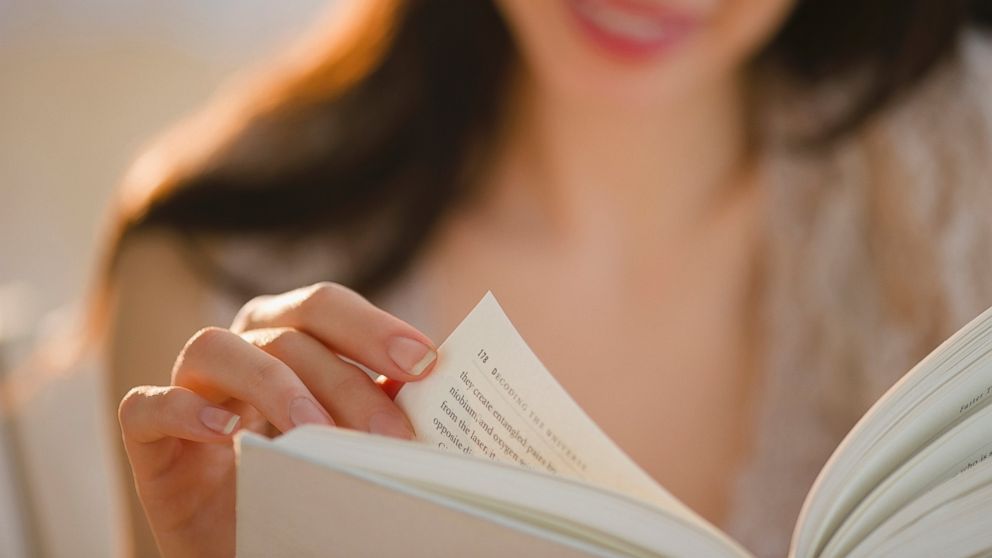
It's amazing you can read these words.
It took millions of years for humans, and our recent ancestors, to
develop the visual and motor and auditory skills that let us function in
the complex world we inhabit today. But in less than 5,000 years, a
brief span in human history, we learned how to read.
And that skill, or at least our understanding of it, is still evolving.
Scientists are using some of their most sophisticated tools to peer
inside the human brain to see what happens when we engage in the process
of reading, and they are finding a number of surprises:
-- Reading is a very complex task that requires several different regions of the brain to work together.
-- But surprisingly, we don't use the same neural circuits to
read as we grow from infants to adults. So our brains are constantly
changing throughout our lives.
-- It appears possible that reading can improve the
"connectivity" between the various brain circuits that are essential to
understanding the written word.
-- And there is recent evidence that simply reading a good novel
can keep that enhanced "connectivity" working for days, and possibly
longer, after we have finished the book.
Reading is not just one of the talents we were born with, like seeing
and hearing. It is a "recent cultural invention," as one researcher put
it. Just a few thousand years ago, some creative human probably carved
the first symbol in the wall of a cave, launching his followers on a
rich, new adventure -- reading.
But not much evolutionary time has passed between that caveman's attempts to leave a message for someone else and today.
So it seems likely that we are retraining old tools, like sight, for a
new purpose, like reading. Only in the last couple of decades have
scientists been able to start unraveling that story, and there is still
much that is unknown.
One of their main tools is functional magnetic resonance imaging (fMRI,)
a scanner that allows them to see what is going on in the brains of
human subjects without having to cut their skulls open.
Blood rushes to the parts of the brain that are active, thus telling
researchers which areas are responsible for different functions, like
dreaming, and reading, and thinking about making love.
Neuroscientists at Emory University in Atlanta have determined that just
reading a gripping novel makes changes in the way the brain connects
with different circuits, and most importantly, those changes last for at
least five days. They may not be permanent, but that at least suggests
that the rewards from reading last longer than the act itself.
Emory's Gregory Berns and his colleagues put 21 students (12 females and
nine males) through an fMRI for about 30 minutes a day for 19 days to
collect their data. During the experiment the participants read the
2003 novel, "Pompeii," by Robert Harris, based on the destruction of
that city by the eruption of Mount Vesuvius.
The students were scanned for five days before reading the book, and
five days after they had finished. During the intermittent nine days
they read one chapter each evening before the scanning the following
morning.
The scanner revealed a sharp spike in two neural networks after the
first chapter, and that continued throughout the rest of the experiment,
including the five days after the reading was over.
Even though the participants were not actually
reading the novel while they were in the scanner, they retained this
heightened connectivity," Berns said in releasing the study.
The effect lasted, but the experiment left more questions than answers.
"It remains an open question for further study as to how lasting these effects are," the study concludes.
The study underscores the difficulty of conducting brain research among
healthy subjects when it's impossible to control every aspect of their
lives.
They obviously read the book, because they passed a quiz each day before
being rolled into the scanner, but what else did they do? Were they
still thinking about the book while in the scanner, although they were
supposed to be at a "resting state" in which they are mentally
unengaged?
And it is known now that the human brain is never really "at rest." It
remains an active processor, even in our sleep.
The fact that the participants' neural circuits were active while they
were reading is not surprising, because some circuits light up whenever
we do anything. But the effect lasted beyond the book, and that has
intrigued other scientists who must now duplicate, and expand, the
findings for them to remain viable.
There is some support for the Emory scientists from unrelated research
projects. Researchers at Carnegie Mellon University, for example, found
that children who had trouble reading gained a major benefit during a
six-month effort to raise their reading skills.
The children improved their ability to read, but they also increased the
neural connectivity within a key network. That research showed that
behavioral training -- reading, in this case -- can actually "enhance
brain function," Thomas R. Insel, director of the National Institute of
Mental Health, which supported the work, said in announcing the findings
in 2009.
Interestingly, those improved circuits may not be the same circuits the children will use as they grow older.
Scientists at the Washington University School of Medicine in St. Louis
found that even the seemingly simple act of reading involves 17 regions
of the brain, but not all at the same time. They studied 30 persons
ranging in age from seven to 35 and found that some regions actually
grew less active with age, so even the physical activity in the human
brain is not constant.
And that reinforces something our mothers tried to teach us: Start early. Read often. Give your brain a little help.
Sunday, January 12, 2014
New report says millions of women at risk of falling into poverty, economic ruin
Although
in recent decades women have made historic advances in nearly all areas
of American public life, a staggering number of women across the
country are still teetering on the verge of poverty and economic
disaster, a new report released Sunday shows.
 The report,
co-authored by NBC News special anchor Maria Shriver and the Center for
American Progress, takes a wide-angle snapshot of a national economic
crisis — seen through the eyes of women. The key findings paint a
portrait of an estimated 42 million women — and 28 million dependent
children — saddled with financial hardship.
"These are not women who are wondering if they can 'have it all,'" Shriver wrote in her introduction to the report. "These are women who are already doing it all — working hard, providing, parenting, and care-giving. They're doing it all, yet they and their families can't prosper, and that's weighing the U.S. economy down."
Amid an apparent boom in female empowerment and participation — a time in which women earn the majority of secondary degrees and represent more than half of the country's voters — the report says that millions of women are still struggling on the margins of American society, bruised by the recent recession and the day-to-day trials of family finances.
Women make up close to two-thirds of minimum-wage workers in the country — and upwards of 70 percent of those low-wage workers receive no paid sick days whatsoever, according to the report.
All the while, some 40 percent of all American households with children below the age of 18 include mothers who are either the only or primary source of income — with the average earnings of full-time female workers still just 77 percent of the average earnings of their male colleagues, the report reads.
The authors also presented the results of a survey of 3,500 adults across America that offers a glimpse into the on-the-ground realities of contemporary womanhood. Republican and Democratic pollsters worked together to "write a statistical narrative" of the women who "are an essential part of our nation's fabric and economy," the report says.
Among the chief findings from survey respondents who are low-income females:
"Leave out the women, and you don't have a full and robust economy. Lead with the women, and you do," Shriver wrote in the report. "It's that simple, and Americans know it."
The report — which weaves together the personal stories of working women with "public, private and personal recommendations that can help reignite the American Dream for women and their families" — is the third such document published by the eponymous nonprofit media initiative in the last five years. The first was focused on the growth of the female workforce; the second on the Alzheimer's epidemic.
Dozens of luminaries in government, business, academia and the arts — from former Secretary of State Hillary Clinton to pop star Beyoncé Knowles-Carter — contributed reflections to the document.
"I have always believed that women are not victims," Clinton wrote. "We are agents of change, we are drivers of progress, and we are makers of peace. All we need is a fighting chance."
In a short essay, Beyoncé decried gender inequalities and pay disparities between men and women.
"We have to teach our boys the rules of equality and respect, so that as they grow up, gender equality becomes a natural way of life," she wrote. "And we have to teach our girls that they can reach as high as humanly possible."
Later in the report, Facebook Chief Operating Officer and "Lean In" author Sheryl Sandberg makes the case for nationwide paid maternity leave policy and reductions to the skyrocketing cost of child care, among other policy proposals.
And Sen. Kirsten Gillibrand (D-NY) calls for "more women in office at every level of government."
"We have to do better," Gillibrand wrote. "That requires demanding better from our elected leaders, and to me, that means changing the face of those leaders so that their agendas reflect women’s needs."
Brandon Thibodeaux / for NBC News
Eveline's
Sunshine Cottage resident Sheneka Collins helps her daughter, Tamiya,
7, with her homework at their home in Amarillo, TX, on Wednesday.
Low-income or homeless single mothers are offered lodging and financial
support through the program.
"These are not women who are wondering if they can 'have it all,'" Shriver wrote in her introduction to the report. "These are women who are already doing it all — working hard, providing, parenting, and care-giving. They're doing it all, yet they and their families can't prosper, and that's weighing the U.S. economy down."
Amid an apparent boom in female empowerment and participation — a time in which women earn the majority of secondary degrees and represent more than half of the country's voters — the report says that millions of women are still struggling on the margins of American society, bruised by the recent recession and the day-to-day trials of family finances.
Women make up close to two-thirds of minimum-wage workers in the country — and upwards of 70 percent of those low-wage workers receive no paid sick days whatsoever, according to the report.
All the while, some 40 percent of all American households with children below the age of 18 include mothers who are either the only or primary source of income — with the average earnings of full-time female workers still just 77 percent of the average earnings of their male colleagues, the report reads.
The authors also presented the results of a survey of 3,500 adults across America that offers a glimpse into the on-the-ground realities of contemporary womanhood. Republican and Democratic pollsters worked together to "write a statistical narrative" of the women who "are an essential part of our nation's fabric and economy," the report says.
Among the chief findings from survey respondents who are low-income females:
- 75 percent wish they had devoted more time and energy to education and career — relative to 58 percent of the general population.
- 73 percent wish they had made better financial decisions over the course of their lives — and so did 65 percent of the total survey group.
- Low-income women are more likely than men to regret tying the knot when they did — 52 percent versus 33 percent.
- And nearly one-third of low-income women with children wish they had postponed having children — or had fewer of them.
"Leave out the women, and you don't have a full and robust economy. Lead with the women, and you do," Shriver wrote in the report. "It's that simple, and Americans know it."
The report — which weaves together the personal stories of working women with "public, private and personal recommendations that can help reignite the American Dream for women and their families" — is the third such document published by the eponymous nonprofit media initiative in the last five years. The first was focused on the growth of the female workforce; the second on the Alzheimer's epidemic.
Dozens of luminaries in government, business, academia and the arts — from former Secretary of State Hillary Clinton to pop star Beyoncé Knowles-Carter — contributed reflections to the document.
"I have always believed that women are not victims," Clinton wrote. "We are agents of change, we are drivers of progress, and we are makers of peace. All we need is a fighting chance."
In a short essay, Beyoncé decried gender inequalities and pay disparities between men and women.
"We have to teach our boys the rules of equality and respect, so that as they grow up, gender equality becomes a natural way of life," she wrote. "And we have to teach our girls that they can reach as high as humanly possible."
Later in the report, Facebook Chief Operating Officer and "Lean In" author Sheryl Sandberg makes the case for nationwide paid maternity leave policy and reductions to the skyrocketing cost of child care, among other policy proposals.
And Sen. Kirsten Gillibrand (D-NY) calls for "more women in office at every level of government."
"We have to do better," Gillibrand wrote. "That requires demanding better from our elected leaders, and to me, that means changing the face of those leaders so that their agendas reflect women’s needs."
Saturday, January 11, 2014
The 7 Types of Modern American Bigots
The 7 Types of Modern American Bigots
Bigotry is both timeless and universal—go anywhere in the world, at any point in time, and you’ll find some form of bigotry. It’s one of the human race’s most embarrassing qualities.
The United States is no exception, with a rich and storied history of appalling bigotry. And though it may seem like the true heydey of American bigotry has come and gone, 2014 America has its own special blend of casual hatred and gross intolerance.
Let’s explore, by laying out seven common types of bigots you’ll find in America today.
Though of course all races, religions, and ethnicities are bigoted in their own ways, we’ll keep our discussion simple today and focus on the old classic—white bigotry.
Starting with the obvious—
1) The Extremist Bigot

Their Ranks Include: Neo Nazis; white supremacists; absurd cartoon character groups like the Westboro Baptist Church
Defining Attributes: The exact tattoos you’d think they’d have
Typical Behavior: Plotting assassinations; yelling mean things loudly; angrily spelling things wrong in capital letters in YouTube comments
These people are blazingly angry about all sorts of things, and they’re having temper tantrums at rallies and all over the internet, but they’re so far out on the fringe that almost no one can hear them. It’s this shitty fact in their life that they live in 2014, not 1954 or 1936 or 1857.
In lieu of relevance, they settle for clawing for attention by being scary and upsetting, committing heinous hate crimes, picketing soldiers’ funerals, and other things they’ve decided to spend their one life on this Earth doing.
I’ll finish by mentioning that it’s a weird life experience to draw Neo-Nazi stick figures.
2) Your Grandfather

Their Ranks Include: Your grandfather
Defining Attributes: Feels a lot of anger about a lot of things; intensely close-minded; doesn’t give a shit in general
Typical Behavior: Casually dropping racial slurs in front of children and in public
Your grandfather means well—he just happens to be a white supremacist wrapped in a lovable wrinkly case. But the main difference between grandpa and your local skinhead is that your grandfather isn’t really driven by hatred, has little idea what the world is actually like, and doesn’t want to actually hurt anybody. It’s really just that he strongly dislikes black people, gay people, Jews, and Asians. They make him uncomfortable, and he doesn’t think of them as full, legitimate people. It’s sweet, really.
And your grandfather isn’t causing any real trouble. Just keep in mind when you take him in public that racial slurs that were a 3/10 offensive in 1945 are a 10/10 in 2014, and no one has updated his software as of yet.
3) The Teenager Who Forgot to Get Raised in Modern Times Bigot

Their Ranks Include: These girls; this girl; these girls; all these people.
Defining Attributes: Bad life choices
Typical Behavior: Ranting about their dislike of black people on the internet; saying “ching chong, wing wong” in an Asian accent on the internet; getting expelled from things
It turns out that your grandfather’s opinions and vocabulary regarding minorities are a whole lot less cute when emerging from the mouth of a shitty young person. Most of us are relatively unexposed to this undoubtedly large group of miniature bigots. But we do get the periodic pleasure of watching one of them blow up their life prospects with a YouTube rant before settling back down into oblivion.
4) The Far Right Bigot

Their Ranks Include: Extreme right politicians and commentators; not you, normal reasonable Republican reader, so just settle down
Defining Attributes: Well-groomed; passionate about white America; scared of all other colors and places
Typical Behavior: Saying the things they think out loud
There’s a sizable chunk of Far Right America that thinks that white supremacists are over-the-top, but not…necessarily…all that wrong…ya know? Cause like, all white supremacists are really saying is that a true American is white, Christian, and straight, which like, yeah, duh.
And this would be fine, if far right politicians and talking heads were irrelevant like the first three groups on this list.
But since they’re not, we should probably get guys like Pat Buchanan to stop complaining on national TV about gays and lesbians “having the same rights under law” as other Americans and Ann Coulter to stop saying that in her ideal world, “everyone would be Christian.” It just seems like we’re a little too far in the future here for a relevant person to be saying those things in earshot of humans.
And if they’re gonna let a guy like Rick Perry say words out of his mouth that are recorded by a camera, the words probably shouldn’t be, “I’m not ashamed to admit that I’m a Christian, but you don’t need to be in the pew every Sunday to know there’s something wrong in this country when gays can serve openly in the military but our kids can’t openly celebrate Christmas or pray in school.”
5) The “Unbigoted As Long As It’s Not In My Family” Liberal Mother Bigot

Their Ranks Include: Your mother; probably, right?; okay, or not! calm down; I’m never writing about such a sensitive topic again, this is terrifying
Defining Attributes: Philanthropic; open-minded when it comes to everyone else’s family; vocal Obama supporter
Typical Behavior: Saying all the right, unbigoted things; pretending, in general, to not be a massive bigot
The Baby Boomer generation includes a large number of these women (and men), and they’re a bizarre breed. They were genuinely thrilled when Obama became the first black president, and they’d also be secretly devastated if their daughter married a black guy. They detest conservatives who say that marriage should be between a man and a woman, and they might also cry in bed for a hundred nights if their son turned out to be gay.
These women are super unbigoted in theory, it’s just that they’re basically Pat Buchanan when the people they actually care about are involved. Great work.
6) The Overcompensating Bigot

Their Ranks Include: A vast number of Americans under 35 who grew up in liberal environments
Defining Attributes: White guilt
Typical Behavior: Being condescending to black people by showering them with effusive praise or deference out of nowhere
This is one of the defining idiocies of young liberal America. This group is so incredibly concerned with not being racist that they treat black people totally differently than they treat everyone else—which is, well, racist. They believe in strictly different rules for different races—show them the blog Stuff White People Like and they’ll cackle reading it; show them a blog called Stuff Black People Like, they’ll throw a tantrum in the comments.
In their overcompensating craze, they end up both insulting black people with transparent excessive praise and creeping them out with their for-no-reason smiles. And dealing with these people can be maddening—I once was ganged up on by people berating me for claiming that Anna Kournikova was obviously hotter than Venus Williams.
These are the people who claim most fiercely that race doesn’t matter, and yet no one is more hyper aware of the color of a person’s skin than they are. In all fairness, they were probably raised by insane secretly-very-bigoted Baby Boomer anti-bigots, so they were likely to turn out a little weird.
If you want to really excite The Overcompensating Bigot, just shoot some vicious racism in their direction—their general response to having their race verbally abused by a black comedian is, “Yes! Harder!” because they’re incredibly grateful to anyone who can relieve them of a few pounds of the mountain of white guilt they’re suffocating under.
7) The “I’m Not Bigoted At All in 2014!” Bigot

Their Ranks Include: You, ideally
Typical Behavior: Judging people by the content of their character
Back in 1983, Eddie Murphy came out with his hugely popular comedy special, Delirious. I finally got around to seeing it recently, and was shocked at the ease and frequency with which he threw out the word faggot.
The thing is, it’s not that Eddie Murphy in 1983 was more bigoted than comedians in 2014—it’s that in the last 30 years, society has moved ‘open homophobia’ from the “Not Good But Kind of Fine” Pile to the “Absolutely Not Okay” Pile. So I, living in 2014, winced every time the word came out of his mouth—but the audience back then just laughed.
So for those who have gotten this far and are still feeling pretty good about themselves as a non-bigot—you’re still not fully off the hook. What are you doing or saying today that would make people in 2044 wince with disgust? What’s in the “Not Good But Kind of Fine” Pile today that will be in the “Absolutely Not Okay” Pile in 30 years?
Do you make any sweeping generalizations or do any mocking imitations that just might be totally appalling in 2044? Do you treat any group a certain backward way without realizing, like perhaps discussing obesity in a tone similar to how people in the 1950s talked about kids with learning disabilities? Are there things you say to your close circle today that would make anyone in 2044 lose respect for you, no matter how close they were to you?
* * *
No matter what your level of bigotry, if you want to feel as genuinely unbigoted as possible, here are two good ways to do it:1) Think small. Think about the little details of a person’s life you’re feeling disdain for because of their race, religion, ethnicity, sexual orientation, or appearance—think about the calls they get from their mother, think about the presents they buy for their son, and think about the list they have at home with plans for the future. Remind yourself that that person is trying to live up to someone else’s expectations, battling their own demons, and ultimately just trying to be happy. It only takes a little of this for empathy to replace disdain.
2) Think big. Go read about the universe. Nothing makes bigotry seem more ridiculous than internalizing for a minute how vast time and space are—doing so makes you want to turn to anyone who will listen and hug them and say, “We both exist! On the same tiny planet at the same exact time! Hi!”
Subscribe to:
Posts (Atom)