Dr Ben Carson was my childhood hero. I was even named after him*. He is a brilliant pediatric neurosurgeon with a heart of Gold. I most admire his faith in God and how he used his God given talent to make a difference in people's life.
*(The name was chosen from the bible but since he has such an influence in my
medical career, I like to think there is a reason why we share the same
name.)
Chapter 1
America's History of Rebelling for Change
Of all the nations in the world, of all the social experiments that have
been tried down through the centuries, there is no country I'd rather
be a citizen of and call home than America. Where else but in this land
of opportunity are people given so much freedom to pursue their dreams,
with the potential to bring out the best in everyone?
I have been fortunate enough to visit forty-nine of America's fifty
states, and I never cease to be amazed by the tremendous diversity one
finds here—from big metropolitan cities to small countryside towns, from
tropical islands to forested mountain ranges. Vast expanses of farmland
produce more than enough food to feed our nation, and huge industrial
areas produce airplanes, trains, cars, washing machines, and a host of
other devices. The creative innovations of Silicon Valley and Seattle
give us technological strength, and the great Northeastern corner of our
country boasts some of the most prestigious educational institutions in
the world. Add to that our ethnic and cultural diversity—one of our
greatest strengths—and you begin to see how this nation's diversity
enabled it to rapidly become a world power.
Does America have its flaws? Absolutely. We've certainly made our share
of mistakes over the centuries and then some. But in spite of our
missteps, our nation's history shows that out of our darkest periods, we
have responded time and time again to work toward "liberty and justice
for all." One of America's most respected legacies is indeed that of
rebelling for change.
I grew up in inner-city Detroit and Boston at the tail end of one of
those dark periods in America's history. Slavery had long been
abolished, but widespread racism remained. The civil rights movement was
on the verge of completely transforming the social landscape, but such
change often comes slowly. And today, decades later, I can still
pinpoint the moment when I came of age regarding racism in America.
My brother and I were playing in Franklin Park in the Roxbury section of
Boston when I wandered away alone under a bridge, where a group of
older white boys approached me and began calling me names.
"Hey, boy, we don't allow your kind over here," one of them said. He
looked at the others. "Let's drown him in the lake." I could tell they
weren't just taunting me, trying to scare me. They were serious, and I
turned and ran from there faster than I had ever run before in my life.
It was a shocking introduction for a little boy to the racism that ran
through America at the time.
Growing up, we faced constant reminders of how we were less important
than white people. Even some of those who claimed to be civil rights
activists could be heard saying such things as, "He is so well educated
and expresses himself so clearly that if you were talking to him on the
telephone you would think he was white."
By that time, economic hardship had forced us to move to Boston, and we
were living with my mother's older sister and brother-in-law in a
typical tenement, where rats, roaches, gangs, and murders were all too
common. One day my uncle William was giving me a haircut in the kitchen
while we watched the news on television when I saw white police
unleashing ferocious dogs on groups of young black people and mowing
them down with powerful water hoses. Even little children were being
brutalized
Perhaps even worse than the overt racism that I witnessed on television
was the systemic racism I witnessed in my own family. My aunt Jean and
uncle William had two grown sons who frequently stayed with them in
their dilapidated multifamily dwelling. My brother, Curtis, and I were
very fond of our older cousins, who always made us laugh. But both of
them were constantly in trouble with the police, which resulted in their
brutal, racially motivated beatings or Uncle William having to bail
them out of jail. Unfortunately, their close friends were drug dealers
and gang members, many of whom were killed or died young. Ultimately
both of my cousins were killed because of their association with the
wrong people.
One could legitimately ask the question. Which is worse, overt racist
behavior by the police, or a society that offered certain segments of
its population little in the way of opportunities, increasing the
likelihood of "criminal associations"? We didn't realize these friends
of our cousins were dangerous for us to be around. We only knew that
they joked around with us, gave us attention, and even brought us candy
from time to time.
It wasn't just our inner-city neighborhood where racism flourished; I
found it at school as well. During report-card-marking day in the eighth
grade, for example, each student was supposed to take their report card
from classroom to classroom and have their teacher place a grade in the
designated spot. I was very excited because I had all As, and I had
only one more class to go for a clean sweep. That class was band, which
was going to be an easy A since I was an excellent clarinetist. That
last A would make me a shoo-in for the highest academic achievement
award in eighth grade that year. I was beaming as I gave Mr. Mann my
report card, but my joy quickly turned to sorrow when I saw that he had
given me a grade of C in order to ruin my report card and my chances of
receiving the highest academic award. I knew that my winning the award
would have been an eye-opening experience for many people at Wilson
Junior High School, since I was the only black student in the class.
Much to Mr. Mann's chagrin and to my delight, band was not considered an
academic subject and did not count; therefore, I received the highest
academic award after all. One of the other teachers was so upset about
this that she literally chastised all the white students at the award
ceremony in front of the entire school for allowing a black student to
outperform them academically. The scene is depicted in the movie about
my life, Gifted Hands, although in reality she ranted and raved a lot
longer than the movie suggested. It was at least ten minutes, although
it felt like longer.
In retrospect, I realize that all of these teachers and some of the
students were simply products of their environment, but they triggered
in me a strong desire to start my own personal civil rights movement to
show everyone that I was just as good as they were by doing better than
they did in school. As my academic awards and accomplishments continued
to pile up, I had to combat feelings of superiority, which proved to be
just as difficult as the task of fighting off an inferiority complex.
Nevertheless, by the time I was in high school I had come to understand
that people are people, and that their external appearance was not a
good predictor of what kind of people they were.
In April of 1968, on the day after Dr. Martin Luther King Jr. was
assassinated, a major riot broke out at my high school in inner-city
Detroit. Most of the black students were so outraged that they were
trying to physically harm anyone who was white. Some very serious
beatings took place, and I saw many of my white friends being harassed.
The student population of the school was about 70 percent black, so the
white students did not have much of a chance. At the time, I held a job
as the biology laboratory assistant setting up experiments for the other
students. The department even trusted me with a key to the science
classrooms and the greenhouse. So during the riot, I used that key to
open the greenhouse and hide several white students during the melee.
By that time in my life, I understood the extent of racism in America,
but I also was beginning to have hope for the future. Having lived and
studied among both black and white cultures, I knew that there are good
white and black people and there are bad white and black people. It
mattered not what color your skin was on the outside, but rather what
the condition was of your heart and mind inside. And as I better
understood human nature, I felt more emboldened to do things differently
than everybody else and to chart my own course for a successful life.
I think that many of the people involved in the founding of our nation
also felt they were victims of injustice, but they too had a profound
understanding of human nature and set out to design a system different
from previous governments that would level the playing field.
Today our nation faces a challenge of a different kind—one that
nevertheless requires of us all a movement to stand up for our civil
rights. One that asks us to educate ourselves as to the founders'
original vision for our nation and to take action to assure we protect
and pursue that vision. While many nations lean on their past to give
them a sense of accomplishment, the United States has a history of
redefining itself and moving forward to ensure that there is indeed
liberty and justice for all.
The dangers that face our nation today are every bit as great as those
we have faced in the past. The question is whether we have lost our
capacity to endure hardship and sacrifice for future generations. We
face a national budgetary crisis that threatens to rip our country apart
and destroy our way of life, yet many concern themselves only with the
governmental benefits they might lose. I write with the hope that we can
reawaken the spirit of greatness that created the wealthiest, most
compassionate, freest nation the world has ever seen. In this book we
will embark upon a brief review of pertinent parts of our history that
have everything to do with finding our way forward to a prosperous
future.
Whether the first people to arrive on the North American continent were
migratory tribes that traveled across a land bridge between what is
currently Russia and Alaska, or whether they were ancient sailors who
navigated the ocean—America has always had a rich and diverse ethnic
background. Our nation began that way and we continue to expand that
way. All kinds of people are responsible for our nation's rapid
development and great accomplishments, and by the same token, we share
blame for many of the atrocities that have occurred on American soil.
The impetus for Europeans to quickly settle the Americas came from the
discovery of vast mineral deposits and other natural resources that
could create enormous wealth. It was Amerigo Vespucci, an acquaintance
of Columbus, who is credited with America's discovery in 1497, five
years after Columbus landed in the Caribbean Islands while searching for
a new route to the spice-rich Far East. Chinese Admiral Cheng Ho, who
visited the Americas in 1421, could lay claim as well—and there is also
evidence that Scandinavian explorer Leif Erikson reached the Americas
hundreds of years before any of these other explorers. Regardless of who
"discovered" America, Columbus's expeditions certainly raised awareness
back in the Old World as to the New World's vast potential for
increasing the wealth of those nations that were able to exploit it. And
once this became known in the Old World countries, explorers began to
arrive.
The Spaniards had significant colonies and exploited the mineral wealth
here, and America could easily have been a Spanish-speaking nation, but
an intense rivalry between Spain and England, particularly during the
latter part of the sixteenth century, put America up for grabs. Spain's
domination of the oceans was challenged by England and the Dutch, who
were building an extremely large merchant marine fleet in Europe. The
final nail in the coffin of Spanish domination of the oceans took place
in 1588, when the Spanish Armada was sunk in a battle with the English
and, more importantly, by a ferocious storm, which decimated their
mighty fleet. Because the English dominated the seas in the early 1600s,
they decided it was their right to begin colonizing America, and the
first of the permanent English colonies, Jamestown, was established in
1607.
I still remember the idyllic pictures of the Jamestown settlement in my
school books as a child, but in reality the settlement was anything but
ideal. Many of the settlers were English gentlemen who had no idea how
to work in a wild environment. They quickly ran out of food while
battling the Algonquin and enduring very harsh winter conditions. You
don't have to have much of an imagination to visualize how desperate
those early settlers must have been. The vast majority of the early
settlers succumbed to starvation and violence, and there are even
credible reports of cannibalism. They suffered extreme hardship and
personal sacrifice, all to create a more stable and prosperous future
for subsequent generations.
The Europeans had also not anticipated the fierce resistance shown by
the Native Americans, who had no intention of simply handing over their
land. Although many movies portray the Europeans as vastly superior to
the Native Americans in warfare, their most effective weapons were the
diseases they brought, against which the Native Americans had no
immunological resistance. These diseases wiped out whole villages and
tribes through massive epidemics that were far more effective than any
fighting force. While the Native Americans were being vanquished, the
English, French, and Spaniards, among others, fought for the dominant
position in the New World. The Jamestown colony would never have
survived if it had not been for the friendship developed with the tribe
of Powhatan, who taught them some basic fundamentals of farming and
traded food for beads—a gracious, saving exception to the conflict and
warfare that characterized our nation's early history.
In time, the English Jamestown settlement grew and thrived, especially
after the introduction of indentured servants and slaves in 1619 and the
development of American tobacco, which quickly became all the rage in
England and other parts of Europe. The rapid growth of the tobacco
industry turned out to be a financial bonanza for the fledgling colony,
enabling it to survive. There were early attempts at remote self-rule,
the most permanent of which was the establishment of the House of
Burgess, which consisted of a governor and "councilors," appointed by
the governor, and some representatives of estates.
Around the time of the establishment of the House of Burgess, a second
permanent colony was being established by the pilgrims in Plymouth,
Massachusetts, in the harbor of Cape Cod Bay. These religious
separatists were interested in the New World primarily because they felt
that their freedoms were compromised both in terms of religion and life
in general. In an attempt at self-rule, they constructed an agreement
of behavior known as the Mayflower Compact, the first formal
constitution in North America. In this contract, they agreed to the fair
and equal treatment of everyone for the good of the colony.
Unfortunately, "everyone" did not include women, those who were not land
owners, slaves and indentured servants, or the region's natives. To
their credit, they were attempting to build a type of society that was
foreign to most of the world, since most colonies were governed
according to the wishes of the ruler. These were immature baby steps
toward a more noble goal, but at least they were steps in the right
direction
Over the next few decades, an explosion of colonization occurred,
largely from people seeking religious freedom and/or financial
opportunities. Many in Europe saw an opportunity to escape the
oppressive and overbearing governmental systems under which they
languished, and these people emigrated in droves, bringing with them a
strong determination to make a better life for themselves and their
offspring, unfettered by oppressive overseers disguised as government.
The opportunities to enrich themselves through their own efforts brought
out the best in many people, but it also brought out avarice, greed,
and a host of unethical behaviors that invariably accompany freedom.
Fortunately, those whose characters were constrained by religious
principles far outnumbered those lacking moral rectitude. The British
remained technically in charge of all these colonies, but due to the
independent-minded nature of many of the colonists and the distance
involved, British control was somewhat tenuous. The other great power of
Europe, France, was also vying for control and power in the New World,
but they were largely distracted by their ongoing wars with the
Iroquois, and seemed to be much more interested in trading and
exploration than they were in establishing permanent settlements.
Throughout the mid- and late seventeenth century, immigrants flooded in
not only from England, but also from France, Germany, and other parts of
Europe. Migrating into the area that was to become Pennsylvania, a
large influx of Quakers provided a solid base for the abolitionist
movement that was to come. By the end of the seventeenth century, the
colonies had become more sophisticated and organized, establishing
Virginia, Massachusetts, New York, Maryland, Rhode Island, Connecticut,
Delaware, New Hampshire, North Carolina, South Carolina, New Jersey, and
Pennsylvania, with Georgia added in 1732. Thus the basis of the
original thirteen colonies was in place.
This ambitious taxation was a haunting echo of the life the colonists
had experienced in the Old World and set out for the New World to
escape. But it was also a harbinger of the times we find ourselves in
today in America. In both instances, unrest began to stir in the people.
Growing Resentment over
Out-of-Control Taxation
The British Parliament had imposed many taxes on the colonists under the
revenue acts, but still they were not satisfied with the amount of
money being collected. So in 1765, the Stamp Act was passed, which
imposed a levy on just about every type of legal document imaginable,
including marriage licenses, college degrees—even such ordinary items as
newspapers and playing cards. Needless to say, the colonists were not
pleased about this, even though British citizens in England were already
paying not only this tax, but many other exorbitant taxes. The
Americans felt that once they acquiesced to more British taxation, there
would never be an end to escalating tax rates, so they began to boycott
British products. The colonists vigorously—and sometimes even
brutally—encouraged their fellow Americans to use only products produced
in the New World, and they began attacking British tax collectors,
sometimes beating them, or even worse, tarring and feathering them. They
also used these same intimidation tactics later on fellow Americans to
assure compliance with boycotts of British goods. Finally, in 1766, the
British Parliament repealed many of the taxes, including the Stamp Act.
The colonists celebrated the repeal, even erecting a statue of King
George in New York.
It wasn't long, however, before the taxation monster raised its ugly
head again, for in 1767, the Townshend Act was passed. This famously
included taxes on tea, which the colonists had grown increasingly very
fond of. Through trickery and parliamentary procedures, the Townshend
Act allowed the British's almost bankrupt East India Company to gain a
virtual monopoly on tea sales, exacerbating tensions between the
colonies and England. The colonists once again decided to boycott
English imports, prompting an angry response from England, who sent four
thousand British troops to quell the colonial protests. To sustain
themselves in the New World, the British troops competed with the locals
for jobs, which further inflamed tensions between the sides.
In December of 1773, some of the colonists were so outraged with the
taxes on tea that they disguised themselves as Native Americans, boarded
British ships in Boston Harbor, and destroyed the tea by tossing it all
into the harbor. This, of course, was the famous Boston Tea Party. The
British were so outraged that they closed Boston Harbor and instilled a
harsher governing structure. More taxes and regulations followed, many
of which were quite punitive and became known by the colonists as the
"Intolerable Acts." There were frequent clashes between the locals and
the soldiers without bloodshed, but this changed on March 5, 1770, when a
crowd surrounded a group of redcoats in an angry confrontation and the
British soldiers fired shots into the crowd. Five of the locals were
killed, the first of whom was Crispus Attucks, an African-American and
the first American to die in the Revolutionary War.
The tensions between Great Britain and America continued to build and
numerous skirmishes, some of which are well documented by historians,
broke out. One of the most famous fights took place on June 17, 1775, at
Breed's Hill,1 where approximately 2,500 British troops attacked an
American installation defended by only about 1,400 troops. It was an
intense battle and the British lost approximately 40 percent of their
troops, while the Americans lost less than a third of theirs. Even
though the British eventually won that battle, it was a Pyrrhic victory,
with the devastating psychological impact of their heavy casualties
impacting the rest of the war.
The combination of heavy taxation, excessive regulations, and lack of
representation in their governing structures irritated the colonists to
the point that many of them began talking not only about ways to
protest, but also about the desire to declare independence once and for
all from the British Crown. With all of their backbreaking hard work,
they felt it unfair to have such a significant portion of the fruits of
their labors confiscated by a government that neither represented their
interests nor respected their freedom. Nevertheless, many colonists
(known as Tories or Loyalists) remained loyal to the British Crown and
felt that the benefits of British citizenship—or at least of being a
British colony—were too great to sacrifice for an uncertain future of
independence.
Waking Up to Some "Common Sense"
In 1776, as Washington's ragtag army kept British forces engaged, public
sentiment was growing in favor of independence. All the colonists
needed was a spokesman to galvanize public opinion toward resistance
from Great Britain—and an unlikely figure emerged in the form of Thomas
Paine. He had only been in the country for a little over a year,
"arriving as a failure in almost everything he attempted in life. He
wrecked his first marriage, and his second wife paid him to leave. He
destroyed two businesses and flopped as a tax collector. But Paine had
fire in his blood and defiance in his pen,"2 and America was and still
is a country of fresh starts.
An editor of a Philadelphia magazine, Paine published a fifty-page
political pamphlet, Common Sense, in January of 1776, which began with
one of the most memorable lines in American history: "These are the
times that try men's souls." The pamphlet resonated so well with the
colonists' feelings about independence that over 120,000 copies of the
pamphlet were sold within the first three months, and half a million
copies were sold in the first year. To put the impact of Paine's
pamphlet Common Sense into perspective, in the United States today you
would have to sell about 65 to 70 million copies of a publication—or
about one copy per four to five people—to equal the proportionate
distribution.
Spurred on by the message of Common Sense, enthusiasm for independence
grew dramatically, even among former Loyalists. Paine donated the
profits from the sale of Common Sense to George Washington's army,
saying, "As my wish was to serve an oppressed people, and assist in a
just and good cause, I conceived that the honor of it would be promoted
by my declining to make even the usual profits of an author."3 Thomas
Jefferson even included a portion of Common Sense as the prelude to the
Declaration of Independence, which was adopted by Congress in July of
that year. The publication clearly resonated deeply with the American
colonists' desire for independence.
In fact, their longing for self-government and willingness to fight—even
die—for freedom became so strong that the words of politician Patrick
Henry became a rallying cry for the colonists when he said, "Is life so
dear, or peace so sweet, as to be purchased at the price of chains and
slavery? Forbid it, Almighty God! I know not what course others may
take; but as for me, give me liberty, or give me death!" Finally, in
1776, each of the colonies (except Georgia) sent delegates to the First
Continental Congress, where the process began for the drafting of the
Declaration of Independence.
Tea Parties—Then and Now
The rebellion of the Boston Tea Party has many similarities with the
political movement today known as the Tea Party. For the sake of
simplicity, let's call the colonial protesters the old Tea Party
movement and call the political movement established in 2009 the new Tea
Party movement.
In the days of the old Tea Party, the British government and American
Loyalists attempted to establish and maintain control of the colonies.
When the Patriots first began to resist such efforts, those in power
tended to deny that there was any real resistance from anyone except
extremist, fringe individuals. Let's call this the denial phase. But as
the protests became more prolific, denial was no longer tenable, and the
powers that be decided to ignore the movement. Their hope was that if
they paid no attention to the protesters, it would be less likely that
others would join them and the movement would simply fade away. Let's
call this the ignore phase. Unfortunately for those in control, ignoring
the movement did nothing to lessen its intensity and, in fact, gave it
time to grow even more powerful. The colonists ended up inflicting
significant damage on those in power, forcing them to fight back, in
many cases, with more force than necessary. Many of the regulations
subsequently imposed were a part of this punitive resistance phase. The
more the established powers resisted, however, the more determined the
colonists were to overcome that resistance. Some of the British military
leaders actually began to admire the tenacity and bravery of the
colonial fighters.
After the Battle of Breed's Hill, some of the enthusiasm of the British
and American Loyalists began to wane, and doubts began to creep into
their thinking about whether the growing war was really one worth
fighting. The British had a long and successful history of colonizing
many parts of the world, which had brought them great power and wealth,
but America and the Americans were different than any of the other
groups they had ruled. Perhaps, they considered, America should be
exempt from the sovereign dictates of the throne. Maybe they were more
like England than any of the other colonies in the world.
At some point in the struggle to regain power, it becomes easier for a
ruler to exempt an unruly but powerful subject from punishment than to
suffer defeat. During this exemption phase, it became increasingly easy
for the Loyalists to desert the throne and align themselves with the
Patriots, who were gaining power and the admiration of the populace.
Many of those formerly in power—the American Loyalists, dedicated to the
British crown, for example—began to believe and act on the very things
they once railed against, conforming to the ideology and actions of
their previous enemies. This we shall call the conforming phase. The
final phase is the transformation phase, in which the ideology of the
resistance movement becomes the mainstream philosophy governing a now
changed society. And in the case of the American Revolution, the ideas
of the old Tea Party—less central government, more local rule, and more
personal responsibility—became the basis for a new society that rapidly
rose to the pinnacle of the world.
The New Tea Party: DIRECTing
America Today
The old Tea Party would probably have never been birthed if large
segments of the colonial population had not felt oppressed and betrayed
by the very government that was supposed to be taking care of their
needs. If one were to make an acrostic of the first letters of each of
these phases—denial, ignore, resistance, exempt, conforming, and
transformation—one gets the word DIRECT, and that's basically what
happened: an enthusiastic group of fervent believers was able to direct a
fledgling new nation away from corrupt, oppressive, nonrepresentative
government to a fairer, limited, and representative government.
Now let's look at the same DIRECT acrostic with respect to the new Tea
Party. Late in 2008 and early in 2009, a number of things happened that
caused great concern to a large number of Americans. Among these were
the passage of the Emergency Economic Stabilization Act of 2008, the
American Recovery and Reinvestment Act of 2009, the bailout of several
major financial agencies, and talk about dramatic reform of the nation's
health care system. Scattered small protests about these things were
seen around the nation, but the entrenched powers of government and most
of the media denied their significance.
Then on February 19, 2009, a business news editor on CNBC by the name of
Rick Santelli in a national broadcast from the floor of the Chicago
Mercantile Exchange severely criticized government plans to refinance
"underwater mortgages," those mortgages whose values are less than the
balance owed because of the collapse in housing prices. Many of the
derivative traders on the floor in the background applauded, and the
hosts of the show were bewildered.
The video of Santelli's outburst went viral, with special emphasis on
the part where he called for another tea party, during which traders
would gather all of the derivatives for their mortgages and dump them in
the Chicago River in protest of the massive corporate infusion at the
expense of taxpayers. Shortly after that, many people on television
began to refer to the various local protests as "tea parties." The
entrenched political establishment and most of the media ignored how
fast these protests were growing, just as the British had regarded the
colonial protests during the American Revolution. However, as the
numbers and intensity of these protests began to multiply, the media
began to make fun of the protesters in the hope that this would
discourage others from joining in. The passage of the new health care
legislation in December of 2009, contrary to what the majority of
Americans wanted, was like pouring gasoline on a fire, and it
dramatically increased the strength of the Tea Party movement. From the
perspective of those in the new Tea Party, not only was the government
spending money that it didn't have at an alarming rate, but it had now
enacted a gigantic federal program that was going to be very expensive
and impose freedom-robbing regulations.
As the protests grew, however, they could no longer be ignored, and the
resistance phase began to set in. The attacks from much of the media,
from several members of Obama's administration, and from the Democratic
Party were relentless and mean-spirited. As with the colonial Tea Party,
resistance only served to strengthen the movement, which was beginning
to be joined by many notable political figures and other individuals.
During the 2010 midterm primaries, Tea Party membership had grown to the
point that it was able to significantly influence the outcome of the
primaries. Since their values were more closely aligned with the values
of the Republican Party than those of the Democratic Party, they
concentrated on the Republican primaries, where they prevailed in
several states, removing the entrenched traditional Republican candidate
and replacing them with a Tea Party candidate.
It became increasingly clear that the Tea Party was not simply an arm of
the Republican Party, but rather a significant force for real change.
Its constituents recognized that both the Democrats and the Republicans
were responsible for excessive spending, incessant pork barrel projects
to benefit special constituent groups, and intrusion into the private
lives of citizens. Tea Party members were especially outraged by the
fact that the president and Democratic congressional leaders did not
seem particularly interested in the feelings of the people, as
manifested by their cramming of the health-care bill down the throats of
the American people. As with the colonial Tea Party, denial, ignoring,
and resistance had all failed to stem the tide; therefore, it was time
for them to exempt themselves from the struggle to quash the rebellion.
Commentators stopped deriding the Tea Party and began recognizing it as a
legitimate political force. They began to think that maybe it was
different from some of the other fringe movements that had popped up
over the course of the preceding decades. Officials of the Obama
administration stopped calling them "tea baggers" and began treating
them with respect. As this book is being written, the conforming phase
is beginning, and I wouldn't be surprised to see the transformation
phase arise before or soon after the 2012 presidential election.
Our Nation Is in Hot Water
For several decades now, America has basically had a two-party system:
Democrats and Republicans. Each of these parties has been engaged in the
gradual but consistent growth of the central government and its claim
on power. Ever-expanding programs offering benefits to the masses are
difficult to resist, and with the proliferation of the news media it
also became possible for elected officials to gain great notoriety and
power. This power became addicting to many elected officials who,
instead of going to Washington, DC, for a brief time to represent their
constituency, wanted to hold their positions for extended periods of
time—even for life. This growing power and the progressive intrusion of
government into the lives of the people was so insidious that it went
largely undetected. This process is much like the frog that willingly
sits in the saucepan as the temperature is gradually increased until the
water is boiling, killing the frog. The frog would have immediately
jumped out of the saucepan, however, if the water was already boiling
from the beginning.
In early 2009, many throughout America voiced their discontent as they
began to worry about the excessive government spending for such programs
as TARP (Troubled Assets Relief Program) and the proposed bailout for
many Wall Street entities and large companies such as General Motors.
The country was already in significant debt, with no clear indication of
how that money was going to be repaid. It is easy to see how our
growing debt, excessive spending, and elected leaders ignoring the will
of the people closely resembles the set of circumstances that
precipitated the American Revolution.
Will We Once Again Rebel
for Positive Change?
America got off to an auspicious start centuries ago because its
citizens were unwilling to be herded like sheep by an elite group of
"leaders." They were driven instead by a desire to take ownership of
their own fate and establish a nation created by them and for them.
Their self-determination and celebration of freedom to control their own
lives helped birth our great nation.
Today, however, a fundamental shift has occurred in the role of our
nation's government and the role of its people, and so throughout this
book, we will determine whether those seeds of independence still remain
viable or whether they have been supplanted by passivity and acceptance
of the status quo. For freedom is an elusive bird, constantly on the
move, progressively distancing itself from complacency. Do we value our
freedom enough to pursue it, or have we lost our way without realizing
it? Do we benefit from the principles that established this nation
without understanding them?
What will we as America's citizens write in this next chapter of our
history? Will we settle for being herded by our leaders' understanding
of what is best for us? Or will "we the people" once again rally
together, educating ourselves as to the best possible solutions for a
way forward, communicating to our leaders our collective desires, and
demonstrating that we truly are a nation that rebels for positive
change?
 Photo Researchers
 Courtesy of Ria Chhabra Ria Chhabra stands in front of her project.


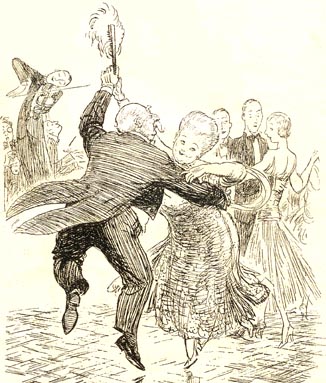
 Our idealised notion of romantic love is actually the biggest enemy of long-lasting relationships, says Mark Vernon.
Romantic love is widely celebrated as the pinnacle of love.
It is marketed as the peak experience without which you cannot say you
have lived. The signs of its allure are everywhere, not just on
Valentine's Day.


An Explanation for the Rise of Disease Beginning in the 20th Century?
How is Dirty Electricity Dangerous?
How to Protect Yourself from Dirty Electricity
http://articles.mercola.com/sites/articles/archive/2010/08/31/how-dirty-electricity-causes-diseases.aspx